


"At first, dogs on the outside really surprised me." Akihira Gaevsky-Hanada on adapting after imprisonment
25-year-old Akihira Gaevsky-Hanada spent almost five years in prison. The young man was sentenced to 16 years of imprisonment in the "Revolutionary Action" case. On June 21, 2025, Akihira became one of the first political prisoners to be released as a result of negotiations between the American side and Lukashenka. He was immediately deported to Lithuania. At the time of his release, he still had 10 years of his sentence remaining. In his tenth month of life in emigration, Akihira told "Viasna" about the path of legalization with a Japanese passport and what especially helps him adapt to freedom.

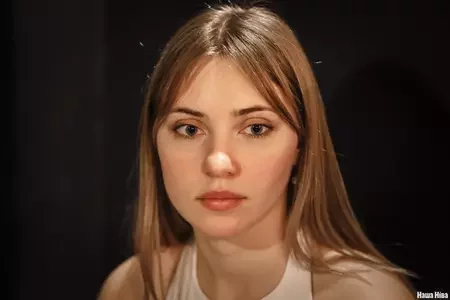
Akihira Gaevsky-Hanada. Photo from the hero's personal archive
"Behind bars, I set a goal — to preserve mental health"
Adaptation after a long term turned out to be a longer process than he imagined in the first days of freedom, says the former political prisoner:
"I've been free for nine months now. I thought I'd get everything done in four months. But even though I've been constantly doing something, I still haven't managed to resolve some issues. You still can't make long-term plans, only solve short-term problems.
But overall, my adaptation is going well — maybe that's because I'm still young. It helped that I have many acquaintances in Vilnius, and also that I immediately received help with medicine. I don't know when I would have gotten a medical examination and started treatment on my own."
Years in imprisonment did not pass without leaving a trace on his physical condition. As Akihira says, his eyesight suffered particularly due to poor lighting and limited space.
"Now I'm trying to recover my health. I feel like I was physically stronger before imprisonment. During this time, my eyesight deteriorated significantly — it dropped from minus two to minus four. The cell-type confinement (PCT) and prison regime especially affected this, as there was poor lighting and I had to constantly strain my eyes. There was no opportunity to simply look into the distance. There was also a lack of vitamins.
Behind bars, I set my main goal — to preserve my mental health. And I largely succeeded. There was daily stress, but I had to find something worth holding onto. That's how I managed to maintain my psychological state."
"Until you get these 11 digits, you are an incomplete person in the state"
Akihira's Belarusian passport was returned upon deportation, but it soon expired. Therefore, he is legalizing his status with his second passport — Japanese. But despite this, the former political prisoner faced the same problems as other Belarusians: without a residence permit, life in emigration is practically blocked.
"In my opinion, my situation is better than that of many Belarusians. I have Japanese citizenship, so it's a bit easier for me with legalization. But I still waited six months after my release to get a residence permit. And without this status, I couldn't get a job or open a bank account.
Initial assistance from organizations is calculated for several months, but it's not enough time to legalize. It's good if family helps. In the first months of freedom, you're provided with support, but then what? How quickly will documents be issued? How quickly can you find a job? Many places require the Lithuanian language. Even with a strong desire, you can't learn it that quickly. Many former political prisoners are concerned about these issues."
Some simple everyday things turned into a quest for the political prisoner because his documents were damaged by security forces.
"Recently, I wanted to change my driver's license because it was damaged at GUBOPiK (Main Directorate for Combating Organized Crime and Corruption). They bent it so that some data is no longer visible. I thought I could just replace the license here, but no — I have to pass theoretical and practical exams. Last year in Lithuania, it was still possible to do this in Russian, but now — only in Lithuanian and English. I wanted to do it already, but I couldn't register for the exam without a residence permit. I couldn't even get a medical certificate at some centers without a residence permit. Until you get these 11 digits, you are an incomplete person in the state. You exist, but you don't know how."
"Analyzing the information, I understood what was happening in the world"
After receiving documents, Akihira returns to the IT field, although he understands that a five-year gap in experience scares employers.
"After obtaining a residence permit, the main thing is to find a job. For me, this is now the main issue. Before imprisonment, I worked as a programmer. And a five-year break is a long time for a profession. Companies see that a person hasn't worked for five years, so it's stressful."
Before the publication of this material, the young man shared that he had already found a job. The former political prisoner also decided to continue his education. Last October, he re-enrolled at the European Humanities University.
"It turns out I was on 'academic leave' for five years, but they held a place for me as an exception. Before, I studied 'Law,' and now I've changed my program to 'Politics and International Relations.' Studying is something I'm good at. I like to learn."
The interlocutor notes that he didn't have to significantly catch up on information during his time in captivity. Even behind bars, Akihira tried to keep track of world news, using the inverse logic of propaganda.
"You still know the main things in imprisonment. Through radio, TV, magazines. You don't know some details, but you know there's a war going on. When I was in the colony, I actually listened to Russian propaganda news on TV. If they denied something, it meant it was true. By analyzing the information I received there, I understood what was happening in the world. Once free, it was interesting to try artificial intelligence. It's one thing to read about it in a newspaper, and another to try it yourself."
"When I got out, it was interesting to see the solidarity"
Adapting to life at liberty is also a return to the simplest human joys: observing the world, communicating with loved ones, the diversity of the world, and realizing that you have been supported all this time.
"Conversations with my beloved girlfriend help me adapt. In imprisonment, I was already tired of only male company, although I was mostly lucky with people. For all five years, I was only surrounded by prisoners just like myself; I didn't see any colors. Especially under the prison regime, I really looked forward to magazines to flip through them and see photos of people from freedom. At first, dogs on the outside really surprised me — so many different breeds around. In captivity, you only see dogs during transfers."
The former political prisoner says that he learned about the extent of solidarity with him from the materials of the criminal case in the "Revolutionary Action" case.
"Even during imprisonment, we had the opportunity to read about solidarity, because our case materials contained many screenshots from information channels and Telegram channels. So, while reviewing the case materials, we read the internet for a year. Through screenshots, we saw what was happening and where. In court, they played videos of interviews with our friends who had left the country."
Upon deportation, Akihira's letters and postcards were taken away, but he warmly recalls the wave of solidarity with him.
"Now that I'm out, it was interesting to see the solidarity. Before my arrest, I myself organized support actions and wondered if political prisoners needed it, since they couldn't see it. But now I understand that it's important, because people can later read that they weren't forgotten.
Behind bars, I was convinced that people on the outside were doing something. Although the Belarusian system is set up to make political prisoners think they've been forgotten. We were told that letters weren't delivered not because it was forbidden for us, but because no one was writing. But I told others that people were writing to us and that we weren't forgotten.
Once free, it was interesting to meet those who wrote me letters in the pre-trial detention center. You correspond with some for a couple of years, never saw them, but you already feel that they have become your friends."
-
"I was freer in the colony." Former political prisoner Tamaz Pipia spoke about 6 years behind bars and the new paranoid Belarusian reality
-
Political prisoner fan Timur Pipiya released
-
"Fled from migrants and gender ideology." Propaganda showed another family of COVID dissidents who moved from Germany to Belarus




Comments