


Israel and Lebanon agree to ceasefire. The main condition remains Hezbollah's refusal to shell
Under the terms of the agreement, Hezbollah must completely cease fire, and its militants must leave the territory in southern Lebanon.
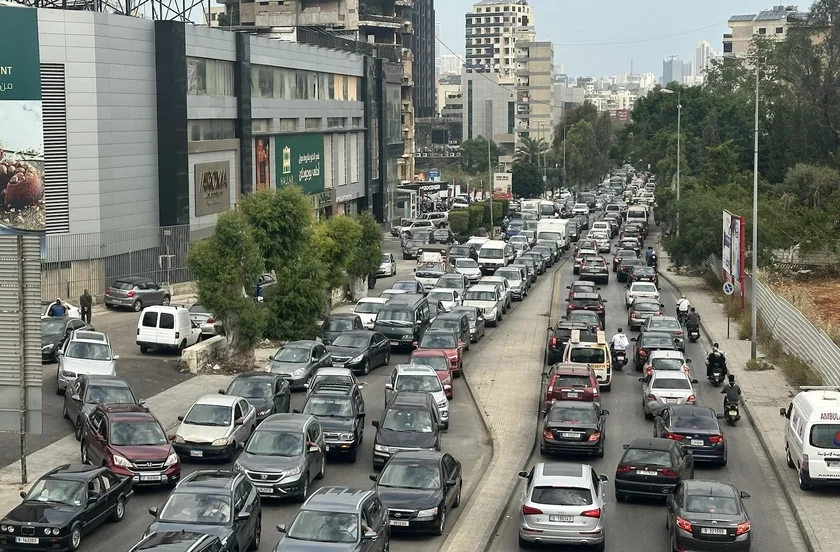
People are massively leaving southern Beirut in anticipation of an Israeli strike. Photo: Houssam Shbaro/Anadolu via Getty Images
Israel and Lebanon have agreed to maintain a ceasefire regime, according to a statement by the US Department of State. The agreement "is contingent on the full cessation" of fire by the Iranian-backed armed group Hezbollah, writes the BBC.
The statement indicates that "the future of relations between Israel and Lebanon must be decided by two sovereign governments," and any attempts "by any state or non-state actor to hold Lebanon's future hostage" are resolutely rejected.
Under the terms of the agreement, Hezbollah must completely cease fire, and its militants must leave the territory in southern Lebanon, from the border to the Litani River, which is referred to as the Southern Litani Sector in the agreement. Currently, this territory is controlled by the Israeli army.
At the end of March, Israeli Defense Minister Israel Katz stated that the Israel Defense Forces would establish a security zone in a wide area of southern Lebanon, and many thousands of displaced persons would not be allowed to return until northern Israel became secure.
The ceasefire agreement followed a partial ceasefire agreed upon on Monday, according to which, Lebanon stated, Israel would refrain from bombing Beirut in exchange for Hezbollah's cessation of attacks on Israel.
The two countries will meet again on June 22 for further negotiations "with the aim of reaching a comprehensive agreement." Hezbollah has not yet publicly commented on this statement.
The agreement was reached after Israeli and Lebanese diplomats held a second day of talks in Washington on Wednesday to finalize the terms of the deal.
US Secretary of State Marco Rubio told reporters that he hoped for the development of "a plan of action to ensure security in [Lebanon], independent of Hezbollah."
This week, the partial ceasefire agreement was tested by both Israeli forces and Hezbollah.
The Israeli military reported intercepting a drone and two projectiles launched from Lebanon.
In turn, the Lebanese Ministry of Health reported nine deaths as a result of Israeli strikes on the country's territory on Wednesday. Among them were two paramedics who were victims of a strike on an ambulance in the southern Shehour district.
According to the Lebanese government's statement, the previous ceasefire agreement reached on Monday states that "Israel will not launch a large-scale offensive on Beirut in exchange for Hezbollah's cessation of attacks on Israel."
The Lebanese government stated that Hezbollah confirmed its consent, but a member of the group's political council, Mahmoud Qamati, told the BBC on Tuesday: "There was no ceasefire agreement, there was only the defense of Dahiya." Dahiya is the southern part of Beirut, considered a Hezbollah stronghold. Israel most often strikes this area.
Qamati also stated that Hezbollah would not adhere to any obligations undertaken at the Lebanese-Israeli negotiations in Washington.
"We believe that these negotiations do not concern us, and we do not recognize their conclusions or decisions, as we fundamentally reject them," he said.
Now reading










Belarusians complain that their favorite panda-branded curd snacks are 'not the same'. Has the recipe changed after being transferred to 'Savushkin Product'?

















Comments