


Are there many world leaders left who came to power before Lukashenka?
On July 20, 1994, Alexander Lukashenka's first inauguration took place. A full 30 years have passed since then, so it's clear that there are unlikely to be many politicians in the world who truly govern states or even formally are considered leaders for such or longer terms. But where does Lukashenka actually rank? We tried to figure it out.

Lukashenka with the current world record holder for continuous real power — Teodoro Obiang Nguema Mbasogo. Photo: BelTA
Oddly enough, compiling a ranking of heads of state by their length of rule is not that simple. Questions inevitably arise as to whether hereditary monarchs and at least formally elected leaders should be grouped together, or whether purely symbolic leaders can be put on the same footing as people who genuinely govern states, with a firm, ruthless hand and without any hint of democracy — otherwise, one could not stay in real power for so many years. In addition, there are many other, very specific nuances — which will be discussed below.
As a result, it turns out that Lukashenka cannot simply be placed in one definitive position — depending on the criteria we use, he can occupy positions from 6‑th to 14th. But first things first.
To begin, let's try to compile a general ranking of current heads of state (including formally symbolic constitutional monarchs) by their length of rule. Regarding specific positions, there may be variations depending on whether certain nuances, which are specified in the comments if necessary, are taken into account or ignored.
So, the main breakdown is as follows:
1) King Carl XVI Gustaf of Sweden (78 years old) — on the throne since September 15, 1973.

King Carl XVI Gustaf of Sweden. Photo: AP Photo/Matthias Schrader
2) President Teodoro Obiang Nguema Mbasogo of Equatorial Guinea (82 years old) — in office since August 3, 1979.

President Teodoro Obiang Nguema Mbasogo of Equatorial Guinea. Photo: Tingshu Wang/Pool Photo via AP
3) President Paul Biya of Cameroon (91 years old) — since November 6, 1982.

President Paul Biya of Cameroon. Photo: Lintao Zhang/Pool Photo via AP
This person, by the way, after the death of the 96-year-old Queen Elizabeth II of Great Britain on September 8, 2022, heads the list of the oldest active heads of state in the world by age.
He is followed, not counting the 89-year-old president of only partially recognized Palestine, Mahmoud Abbas, by 88-year-old King Salman bin Abdulaziz bin Abdulrahman bin Faisal Al Saud of Saudi Arabia, and 87-year-old Pope Francis, who, in addition to leading the global Catholic Church, is also the head of the world's smallest state by both territory and population, Vatican City.
4) Sultan Hassanal Bolkiah of Brunei (78 years old) — since January 1, 1984.

Sultan Hassanal Bolkiah of Brunei (right) with his wife at the coronation ceremony of the King of Malaysia in Kuala Lumpur. Photo: Hasnoor Hussain/Pool Photo via AP
Generally, if one looks at this person's official biography, one can learn that he has been the Sultan of Brunei since October 5, 1967. If this date is taken as the starting point, then he should top the list of long-serving rulers. However, there is one significant "but" here: at that time, Brunei was not an independent state, but only a British protectorate. This country gained full state sovereignty only on January 1, 1984, so it is logical to count the powers of the local sultan from this time when comparing him with the heads of other independent states.
5) President Yoweri Kaguta Museveni of Uganda (79 years old) — since January 29, 1986.

President Yoweri Kaguta Museveni of Uganda. Photo: AP Photo/Hajarah Nalwadda
6) King Mswati III of Eswatini (56 years old) — since April 25, 1986.
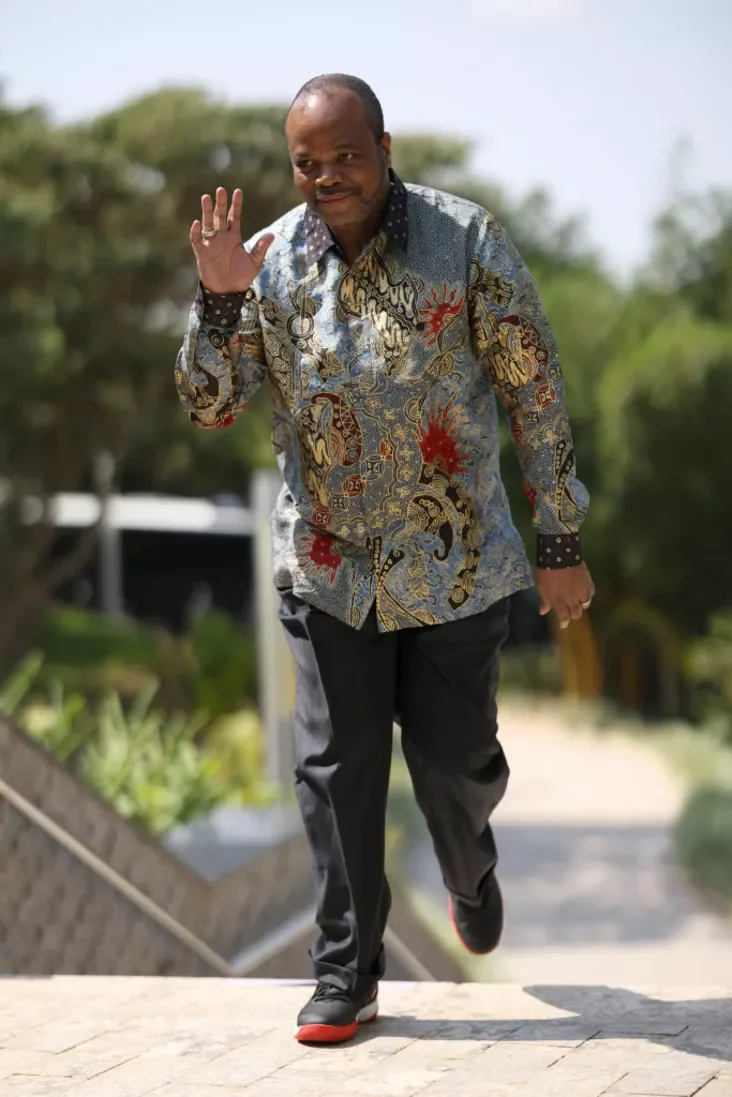
King Mswati III of Eswatini. Photo: Dan Kitwood — Pool/Getty Images
In general, this man was supposed to become King of Swaziland (as the current Kingdom of Eswatini in Southern Africa was officially called then) back on August 21, 1982, when his 82-year-old father Sobhuza II died. However, since Prince Makhosetive (as he was then called) was only 14 years old at the time, regents ruled the country until his 18th birthday.
7) Supreme Leader (Rahbar) of Iran Ali Khamenei (85 years old) — since June 3, 1989.

Supreme Leader (Rahbar) of Iran Ali Khamenei. AP Photo/Vahid Salemi, File
This leader's governing position is specific; there is no other like it in the modern world. Perhaps only with the Vatican can it be compared, and even then, very conditionally and with a stretch. This position is not only political but primarily religious.
But before becoming Rahbar after the death of the famous Ayatollah Ruhollah Khomeini, Ali Khamenei was President of Iran for 8 years, from October 13, 1981. In the Iranian political system, the president is not an empty seat, not just a powerless puppet in the hands of the Rahbar. He has considerable powers and can, without going beyond the general system, significantly influence the overall direction of the country's development. But still, the main figure in the country is the Rahbar, which is why we count Khamenei's rule from 1989 here. But if desired, considering his time as president, he could also be placed in third place, between Teodoro Obiang Nguema Mbasogo and Paul Biya.
8) Prince Hans‑Adam II of Liechtenstein (79 years old) — since November 13, 1989.

Prince Hans‑Adam II of Liechtenstein. Photo: API/Gamma‑Rapho via Getty Images
Regarding this constitutional monarch, there are also questions related to when his powers should be counted from. Here we take November 13, 1989, as the starting point, when Hans‑Adam's father, Franz Josef II, died, after which his son became the full Prince of Liechtenstein. However, one can also, if desired (which is often done), count from August 26, 1984, when Hans‑Adam became regent, i.e., the de facto executor of princely powers for his already quite infirm father in old age. In any case, in both scenarios, he still precedes Lukashenka.
A greater complexity in our context is created by the fact that on August 16, 2004, almost 20 years ago, Hans‑Adam II transferred the powers of daily governance of the principality to his son Alois, who has since then been the Prince Regent, with his father still alive and not even that infirm. And whether to consider Hans‑Adam himself as the active head of state in such a case — one can, of course, argue.
9) King Harald V of Norway (87 years old) — since January 17, 1991.
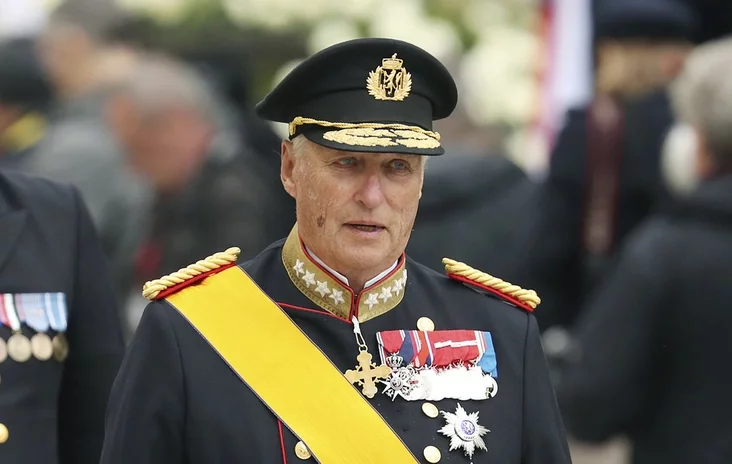
King Harald V of Norway. Photo: AP Photo/Francisco Seco, File
This monarch also served as regent for his severely ill father, King Olav V, for a little over half a year before his accession — from June 1, 1990 — so his reign can be counted from either of these dates if desired. But in his case, due to the short duration of the regency, this does not affect his position in the ranking under any circumstances.
10) President Emomali Rahmon of Tajikistan (71 years old) — since November 27, 1992.

President Emomali Rahmon of Tajikistan during a visit to Italy in April 2024. Photo: Antonio Masiello/Getty Images
Rahmon was officially elected to the post of President of Tajikistan only on November 16, 1994, that is, when Lukashenka had already been ruling in Belarus for almost 4 months. But before that, from November 27, 1992, he held the post of Chairman of the Supreme Council of Tajikistan, which was then officially considered the highest.
Presidential power was generally introduced in Tajikistan in November 1990, and it was immediately seized by representatives of the Leninabad (Khujand) clan, who dominated the republic's political leadership throughout the Soviet period. But during the bloody civil war that unfolded in Tajikistan in 1992‑1997 and was primarily inter‑clan in nature, the Khujandis suffered a defeat. The presidential post was abolished for a couple of years and then restored specifically for Rahmon.
11) President Isaias Afwerki of Eritrea (78 years old) — since May 24, 1993.

President Isaias Afwerki of Eritrea. Photo: Antonio Masiello/Getty Images
And so, Lukashenka was supposedly supposed to complete the top 12, but it's not that simple, as there are two more long‑serving politicians in the modern world with not very typical political biographies who introduce additional confusion.
First of all, there is the 80‑year‑old President of the Republic of the Congo, Denis Sassou Nguesso, who supposedly took office later than Lukashenka — on October 25, 1997.

President Denis Sassou Nguesso of the Republic of the Congo. Photo: Mikhail Metzel, Sputnik, Kremlin Pool Photo via AP
But the specificity is that this African dictator's presidential term was interrupted for 5 years. In general, he first came to power on February 8, 1979, that is, even a few months earlier than Teodoro Obiang Nguema Mbasogo. His regime was pro‑Soviet; Sassou Nguesso demonstrated firm intentions to build communism in the African savannas and for about ten years received generous, not just moral, support from Moscow for this.
But afterwards, the conjuncture changed, Soviet support ended, and as a result, the Congolese dictator, who, unlike Lukashenka in 2020, proved flexible enough in those circumstances, was forced to undertake reforms and hold democratic elections. In these, he received only 17% and, reluctantly, on August 31, 1992, handed over power to the opposition.
His Western‑oriented opponents, however, failed to cope with the country's problems; a civil war with foreign intervention soon erupted there. As a result, five years after his forced resignation, Denis Sassou Nguesso triumphantly entered the capital of Congo, Brazzaville, on tanks from neighboring Angola, which was favorable to him. On October 25, 1997, he was again declared president of the country and has not loosened his grip since.
And so, if we take the time of Sassou Nguesso's second coming to power in Congo as the starting point, then he trails Lukashenka by more than three years. However, if we consider the total time in power, i.e., combine his first term from February 8, 1979, to August 31, 1992, and his second from October 25, 1997, until today, then Sassou Nguesso is "more senior" by more than a decade, as his total tenure is 40 years and almost 4 months.
Something similar happened in the biography of another African politician — the constitutional monarch of the small Southern African state of Lesotho, 61‑year‑old Letsie III.

King Letsie III of Lesotho. Photo: Chris Jackson/Getty Images
For the first time, 27‑year‑old Letsie ascended the throne of this kingdom, entirely surrounded by the territory of the Republic of South Africa, on November 12, 1990. At that time, his father, King Moshoeshoe II, had displeased the angry local army in some way, and it, without much thought, forced him to flee to Great Britain.
Afterwards, however, Moshoeshoe did return to the country and a few years later managed to become king again. On January 25, 1995, Letsie III, willingly or not, ceded the throne to his father, but it turned out to be only for a year: on January 15, 1996, Moshoeshoe II died in a car accident, and Letsie re‑ascended the throne, from which he has not stepped down since.
And here, it's practically the same situation as with Denis Sassou Nguesso: if you count the time from his last ascension to the throne, the monarch of Lesotho trails Lukashenka by one and a half years; if you take the total tenure — then his is almost two and a half years longer.
Thus, if one compiles a ranking of heads of state by their length of time in power, including constitutional monarchs with purely symbolic power, Lukashenka currently holds the 11th, 12th, 13‑th, or 14‑th place in the world, depending on the criteria used to assess the rule of Congolese dictator Denis Sassou Nguesso and King Letsie III of Lesotho, and whether to count Prince Hans‑Adam II of Liechtenstein, who is effectively retired but without formal abdication, as an active head of state.
If, however, all hereditary monarchs and the Iranian Rahbar are removed from this ranking, leaving only those who are at least formally supposed to undergo rotation of power but have long since turned elections into a farce in practice, then the ranking would be as follows:
1) President Teodoro Obiang Nguema Mbasogo of Equatorial Guinea (82 years old) — since August 3, 1979.
2) President Paul Biya of Cameroon (91 years old) — since November 6, 1982.
3) President Yoweri Kaguta Museveni of Uganda (79 years old) — since January 29, 1986.
4) President Emomali Rahmon of Tajikistan (71 years old) — since November 27, 1992.
5) President Isaias Afwerki of Eritrea (78 years old) — since May 24, 1993.
In such a case, Lukashenka occupies either the 6th or 7‑th place in the world, again depending on the principle used to assess Denis Sassou Nguesso's rule. And he is preceded almost exclusively by Africans, into whose close ranks only his comrade‑in‑arms from the CIS, CSTO, and SCO, Emomali Rahmon, has slipped.
It is interesting to note that several years immediately after Lukashenka's accession did not bring to power politicians who hold their positions to this day. Not counting the already repeatedly mentioned Denis Sassou Nguesso and Letsie III, who did not come but returned to power in those years, all politicians who began ruling countries in 1995, 1996, 1997, and 1998 have, as of today, already ceded their powers to others.
But in 1999, three Arab monarchs died one after another, and then all very young, and now 62‑year‑old King Abdullah II of Jordan (February 7), 74‑year‑old King (then still Emir) Hamad bin Isa Al Khalifa of Bahrain (March 6), and 60‑year‑old King Mohammed VI of Morocco (July 23) came to power for at least a quarter‑century. And in Djibouti, on May 8, the now 77‑year‑old Ismail Omar Guelleh became president; he also effectively inherited power from his uncle Hassan Gouled Aptidon, who had previously "served the people" unopposed for 22 years — exactly as long as the state itself had existed.
On the last day of 1999, as is known, Boris Yeltsin famously resigned under the New Year's chimes, and the era of Vladimir Putin began in Russia. In the ranking of "long‑playing" world leaders, he occupies a place quite close to Lukashenka, although he came to power 5 and a half years later than him.
Unless, of course, one takes seriously the purely formal political reshuffle played by Putin in 2008‑2012 with the current de facto court jester Dmitry Medvedev.
Now reading


In Vialikaja Miadzviadcy, the grave of Ignacy Domeyko's brother was found. See how the nearby church, which the world-renowned scientist visited, has been defaced


Comments